Sponsored
Why this Kilkenny farmer switched to a 45m Amazone self-propelled sprayer

Sponsored by
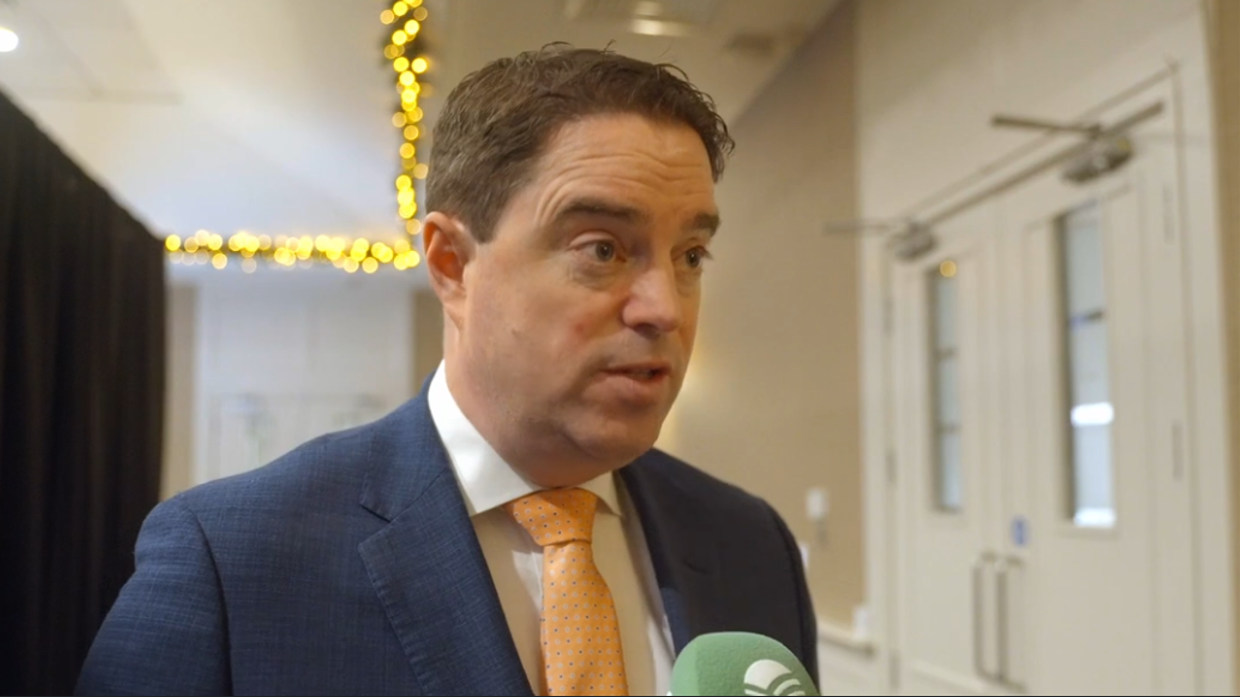
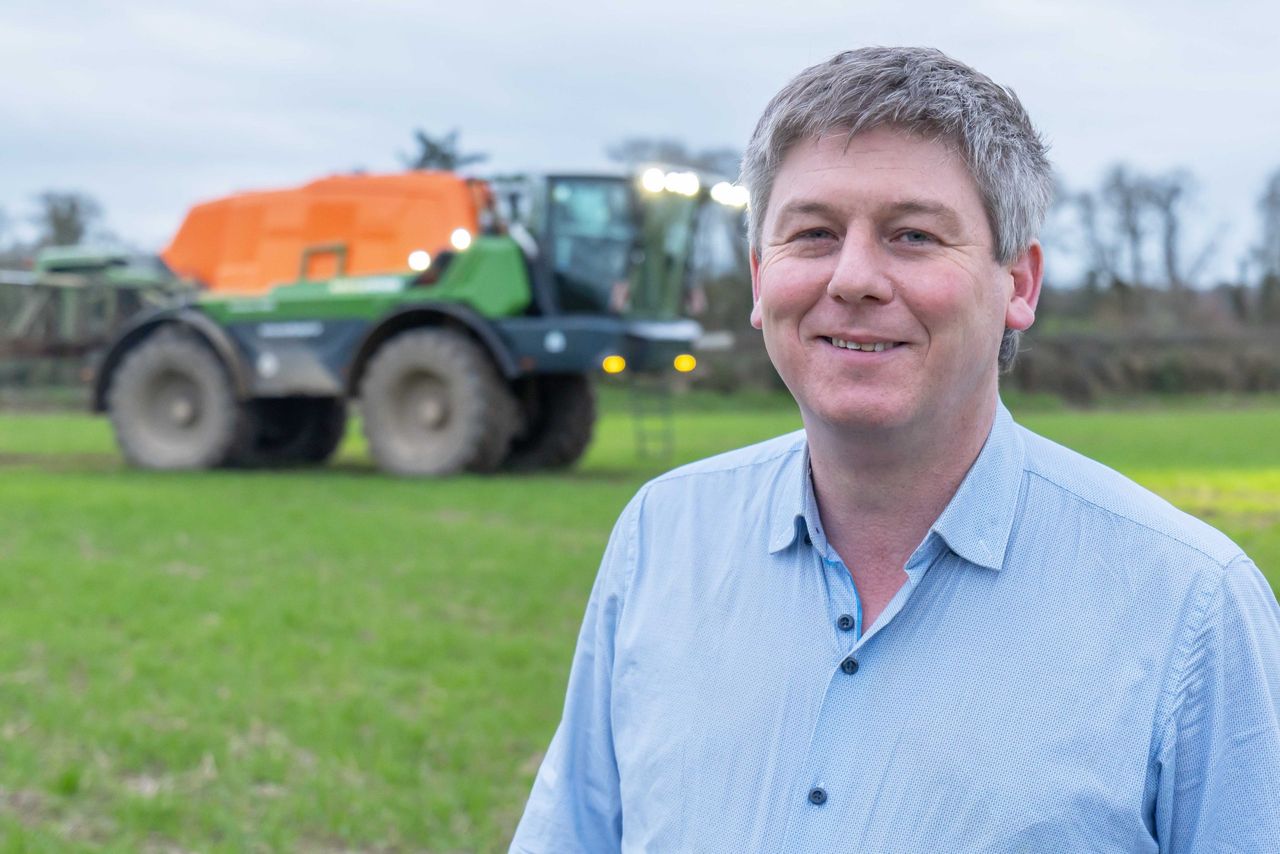
James O’Reilly is a tillage farmer based in north Co. Kilkenny, near a village called Ballyragget.
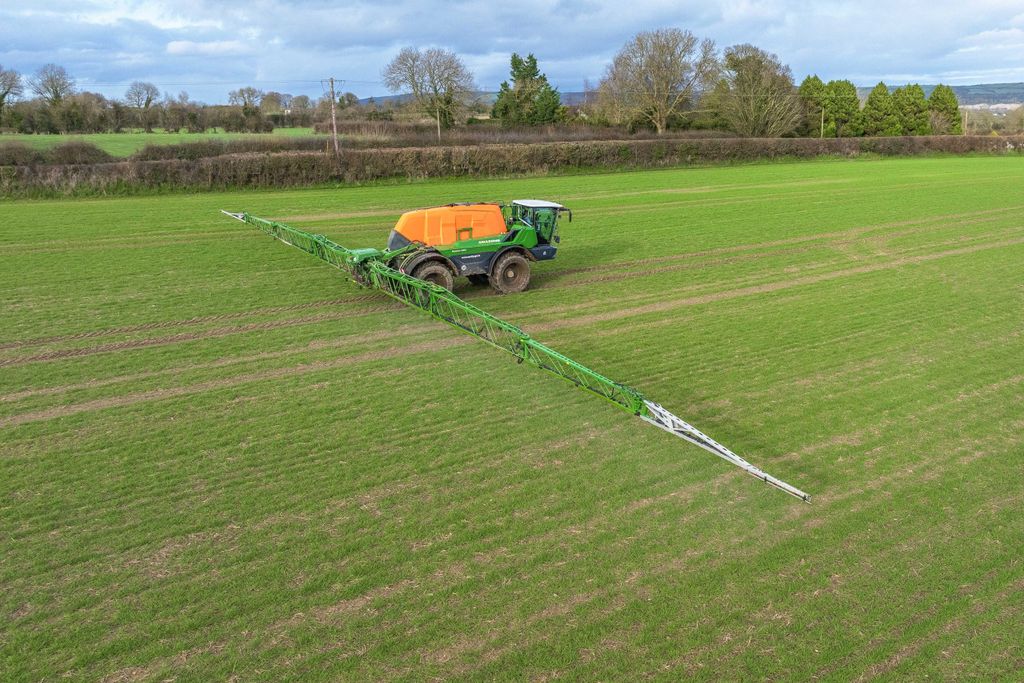
James recently added the Amazone Pantera 7004 to his machinery line up.
He explained: “It's a 300hp Deutz engine, 7,000L spray tank, 500L wash tank or clean water tank, and I have a 45m boom.”
Predominantly focused on winter cereal, oilseed rape and beans on a min-til system, James owns a third of their land and leases the rest.
This means to reach all parcels of land he could be travelling up to 30km in any direction from the far side of Tullow, Co. Carlow, to Cashel in Co. Tipperary.
Before moving to the Pantera, James’ operation included two trailed sprayers and two Fendt 240hp tractors.
“There were two 30m sprayers, 6,000L tanks, and they were a fine outfit," James explained.
"But quite often the second trailed sprayer wasn't out because either there wasn't a man there to follow it or men were busy at other jobs, like in the back end we would spray off with an unselective herbicide prior to drilling.”
Min-til system
Farming in a min-til system, the Co. Kilkenny farmer highlighted that it is important to keep land sprayed in front of the drills and then pre-emerge spray afterwards.
James said: “We're not ploughing, like we're in land here that hasn't seen a plough in 25-26 years so if we don't keep on top of our herbicide programmes, we're going to run into difficulty with grass weeds and to a lesser extent broadleaf weeds.
"Before I only had one 30m sprayer trying to keep up in front of two 6m drills and again after them.
"So from that point of view, I probably have 30%, 40% more output with the Pantera or maybe a little more because I can hold a better forward speed.”
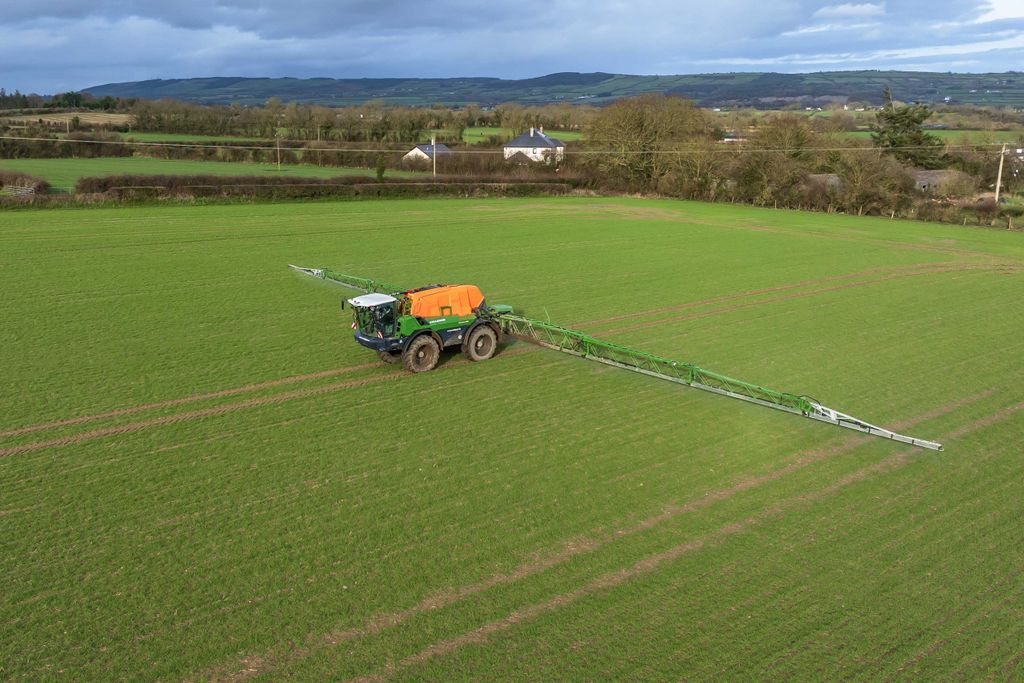
“The other thing then was we went to 45m from 30m. And a lot of people have probably scratched their head. Why do you do that?
"Well, number one, we're cruising near 27k here on a headland because I'm confident I'm not going to hit the ditch with my boom, obviously because I have my tramlines in now.
James noted that the headland will be the "roughest part" of the field.
"Wait till we when you see us getting out and up and down the tramlines in the middle of the field.” he said.
“I have better forward speed at 45m than I had with a 30m trailed sprayer.
"I suppose part of the reason that is there's exceptionally good boom control in this machine, but also where a sprayer boom can get a rough ride is from the chassis of the machine itself, so the wheels itself.
"Well, this machine is like it's on air; all four wheels are independent on a on a kind of a bogey system, but the level of comfort, the level of ride the booms are getting to start with is phenomenal.”
Margins
James said his main aim is to try grow crops with the best margin.
He added: "It doesn't always mean the best yield, although my yields are on a par or better than most out there, I would argue.
“When we looked at the economics of it to justify a self-propelled machine; obviously we were trying to get away with removing trailed sprayers and removing two tractors from the system, and the only way I was going to get it to work was go wider.”
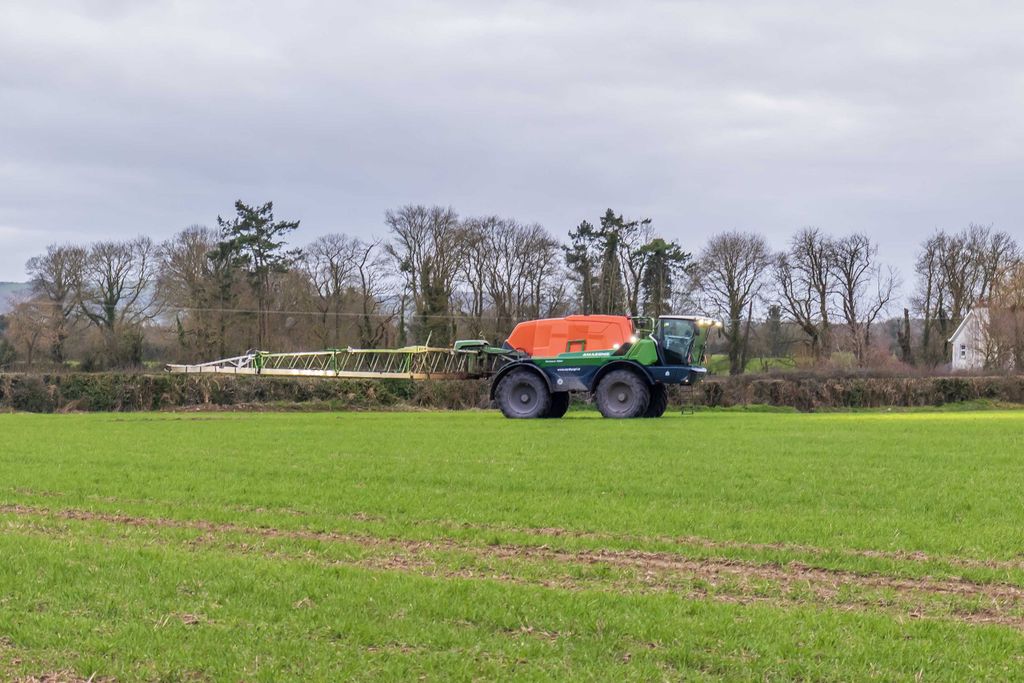
James explained: “When we sit down and do the maths everywhere, I have a tramline, I have two 700mm tracks where the tyres drive where there's no crop.
"By getting corn into those tracks and having a third less tracks across the field gave us an increase in yield of somewhere north of 20 grand a year.
"So that was a massive subsidy or I suppose to help pay for a machine like this."
According to James, "if you look at a cost of a modern 240hp tractor, you're probably looking at north of 200 grand"
"Put a trailed sprayer on it, you're looking at another 140 or 50 grand. Well, you're up on 350 grand."
He explained that he was facing a change anyway as he already had two 240hp tractors.
"To upgrade either one of those was going to cost north of 100 grand or thereabouts. So, believe it or not, the cheaper option was to go to one self-propelled unit.”
Boom design
The Co. Kilkenny farmer was impressed with the design of the boom.
“There's plenty of sprayer manufacturers at 30m, 36m even, but when you're going to have 45m boom, you want a serious boom,” James explained.
“So, if you look at the geometry or the makeup on the back of this sprayer, you have two massive hydraulic cylinders, left grabbing the right boom and right grabbing the left like bracing.
"If I come to a standstill stop or if I take off too quick, there's no fear of the booms being left behind or being forced back in.”
James said that Farmhand helped him get a live demo of a machine before he invested.
“Before I made this investment, Farmhand were good enough to put me in contact with a farmer in Holland who had one of these and myself and my full-time man Ross flew out to look at the machine, and they gave us a demo.
"When I saw that we were driving across harvested potato drills at 20km/h and next thing he brought the sprayer to a standing stop.
"I was expecting the booms to come in around the cab and it didn't. And once I saw that I said that's fine that that's it for me.”
James found Farmhand in general to be of great assistance.
"We got on really well with Farmhand and with Michael Eardly.
"Look you can have the best machine in the world but if you don't have service you have nothing, because they all give trouble, whether it's a loose nut behind the wheels fault or the machine - any machine can give a bit of bother.”
James said Farmhand's commitment to the product meant a lot as well.
"The owners themselves, Stephen and Paul, are heavily involved in the business. They made a commitment to stock various parts and bits and pieces and they have," he continued.
"Amazone were offering us individual nozzles. So we have 90 individual nozzles. So from the point of view of when you're meeting short ground or meeting the headland, you're getting far quicker and more accurate shut off.
"At the moment, we are trialling drone technology where we create prescription maps with the drone and then we plug it into the sprayer to spot spray weeds.
"Well, if you're turning on two and three and four nozzles at a time as opposed to one nozzle to nuke or spray that weed, it's not going to be near as efficient.”
James said things have "come a long way" in the last nearly 20 years of technology.
RTK
He noted that in 2008. they adopted GPS "literally for steering and on and off for the sprayers with maybe five or 10 sections on a 30m sprayer", which progressively got better and more accurate.
"Whereas today now we have full RTK here on the sprayer and full RTK for the section control," he said.
"Once I have it set up right, it’s pretty much pinpoint accuracy on your ins and outs or on your short ground, which we'll see later on where you'll see the nodules literally pinging on or pinging off as I come in or out of short ground.
“But the other nice item about this is that we're trialling spot spraying with a drone. The drone even has RTK, and has to because you have to have pinpoint GPS location of where that weed is.
"Your sprayer then also needs to be able to read that file and go in and spot spray that as well.”
James also outlined some other aspects of the sprayer he liked.
He said: "I have a variable weight track width and this doesn't really concern me much other than when I put on the wider wheels that are on it at the moment, I can let out my track width a small bit to accommodate those wider wheels.
"If I want when I'm on a cultivated land before we sow, I can run the front track widths slightly narrower than the back ones to try spread out the risk of compaction.”
He noted that there is "no drift out of the sprayer".
"We're still spraying at 100L/ha here. We're at 2.6 bar, but we have two nozzles on. We have an 02 and an 04. That's 06.
"If you had to slow down for a bump or a rut or for whatever reason, or as I'm getting close to head on the device pull back here - pressure says dropping. Next thing she's going to switch to a red and if I slow down even more she'll switch to an 02 and bring back up the pressure.
"So that’s how AmaSelect works. It's a really good system, each nozzle body, there's a little ball bearing inside and that's able to divert the spray to whichever orifice or hole nozzle or combination of nozzles as necessary,” James explained.
Curve compensation
He also highlighted that the sprayer has curve compensation.
"When your sprayer goes around the bend, the outer sprayer, the outer boom, is traveling at far faster and the inside is nearly doubling back.
"So, with the GPS, she's switching off nozzles on one side, but she's also putting out a higher rate on the nozzle furthest out.
"So as your sprayer is whipping around, the out boom that's traveling at a lot more speed is covering more ground. and the inner one as you press come back there's less and less speed or space.
"What it's doing then is it'll have maybe two nozzles on the very outside and as we work our way back in we're going to see small nozzles on here and progressively more.
"So it could have any combination of nozzles on progressively getting bigger and bigger as I turn to get an even rating, even though we're going around the bend,” James explained.
He added that if he was spraying a herbicide, "I would back into corners anyway".
"If you want 100% coverage in the corners - as that's where a lot of trash and weeds come out of - I would reverse into corners."
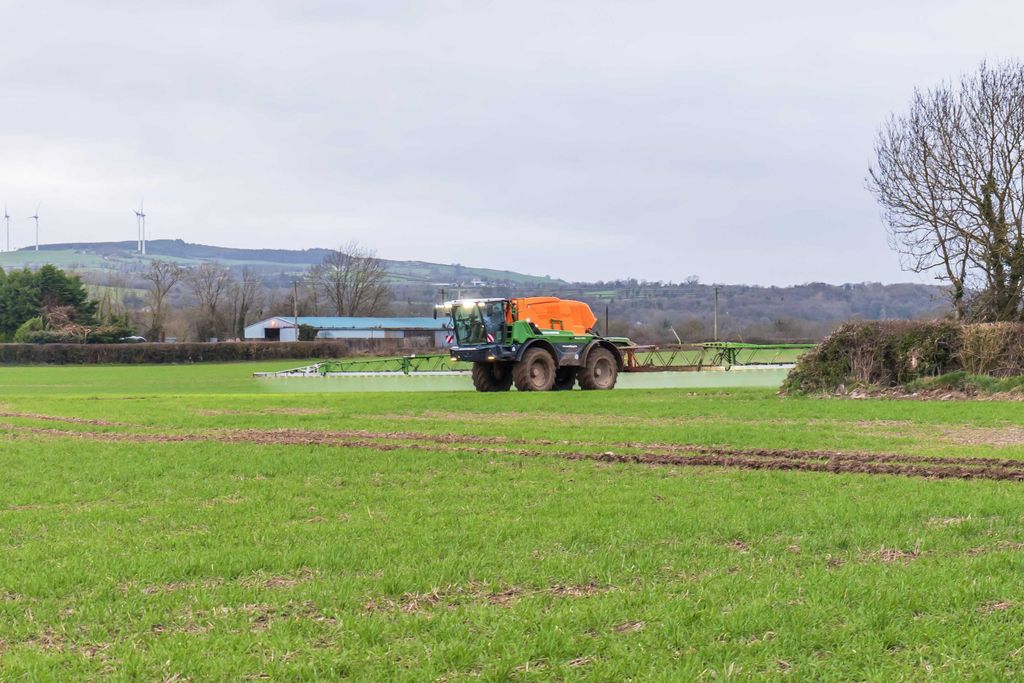
“If you look out there, that boom is bang on where it's supposed to be all the time. There's not a shake or a rock out of it. There's no big pile of drift behind us," James continued.
"We are cruising at 28k there, slowing down a bit coming up the hill and we're still at 2.5 bar pressure, that's the combination of the AmaSelect that's available on their trailed sprayers as well.”
The Co. Kilkenny farmer said he would recommend investing in the sprayer.
He said: “I think if anyone is looking to invest, people often say, 'Oh, it's more technology to go wrong.'
"My argument is if it can do the job that bit better, it's probably worth having, because most of these machines we keep for 5 to 10 years.
"So if it is an extra five or 10 grand or whatever the case will be, I'm not saying how much it costs, but when you put it out over the 10 years, it's £1,000 a year. Your sprayer is probably worth a little bit more when you trade in.”
Tyres
In terms of tyres, James said "you can put any size tyres".
"This came on a set of what I would call road crops 20.9 or a 5 20 85 46 and then I bought flotation tyres on it.
“Kevin Burke Tyres above in Galway made the rims and tires and put a set of Aliance 710 6042s, like a VF tyre, so they can run in quite low ground pressure, which is ideal for me being able to reduce compaction and rutting when you're out in the back end or even this time of year.”
He explained that his is trying to cover ground in shorter window periods.
"We're spraying 10,000ha a year, 25,000ac a year,” he said.
“My argument is when I have to go, I have to go. Timing is everything with crops. Absolutely everything.
"Like I was once told the difference between a good tillage farmer and a bad tillage farmer is a week. I'd say it's a day.
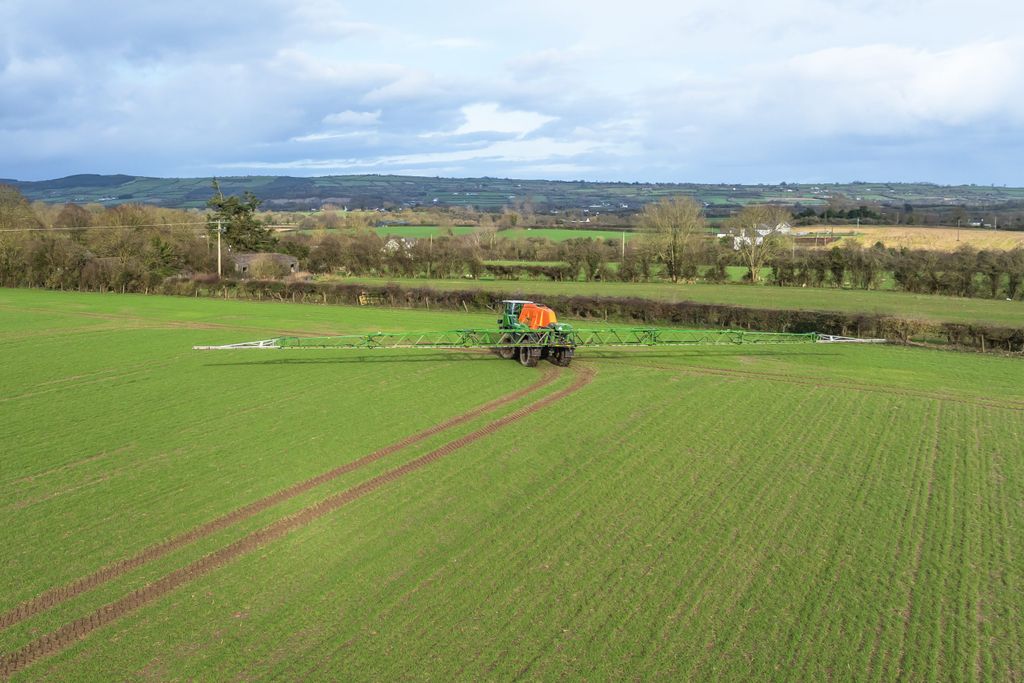
The average field size he deals with is 27/28ac.
James added: "I have some fields at 100ac and some fields at 5ac.
"People say well you're going in there with a 45m sprayer in a 5ac field.
"You drive around it and you go down the middle of it and maybe back up again and out the gate. So I'd argue I'm in those fields even less than I was before.”
“This machine has four-wheel steer and crab steer. So I'm going to kind of get myself in and out of most tight spots as needed.”
James had some advice for people in the market for a sprayer.
“Would I advise anybody to put themselves under pressure to buy a Pantera? No. Unless it stacks up," he said.
"But if you're looking at a self-propelled sprayer, well then you're already in that market and that's a different scenario.
“A little bit of advice, if you are in the market for a sprayer, whether it's a really high-spec trailed sprayer, mounted sprayer, or the self-propelled, my advice would be go to have a chat with the very knowledgeable men at Farmhand and their dealer network around the country.
"Get in contact with somebody who has one of these machines and get up with them for a day because seeing is believing.
"I had to go see a 45m because there was no 45m in Ireland or the UK at the time,” he explained.
Farmhand
According to James, Farmhand have a "wealth of knowledge and experience" on the technology side.
"Even from selecting nozzle choices to what will work and won't work on your system, because maybe what I want in my system is not what you want in your system.
"They're not just trying to sell a machine. They actually understand how it works.
“Farmand and Michael Eardly's actually understand the product not just the principle behind the product but the how it actually functions and works.
"My dad always said you're you can't stand still. You're either going forwards or you're going backwards.”
Sponsored by