Sponsored
Turning every calf into value: The NCBC dairy-beef advantage

Sponsored by

In today’s dairy systems, every calf must add value to the herd.
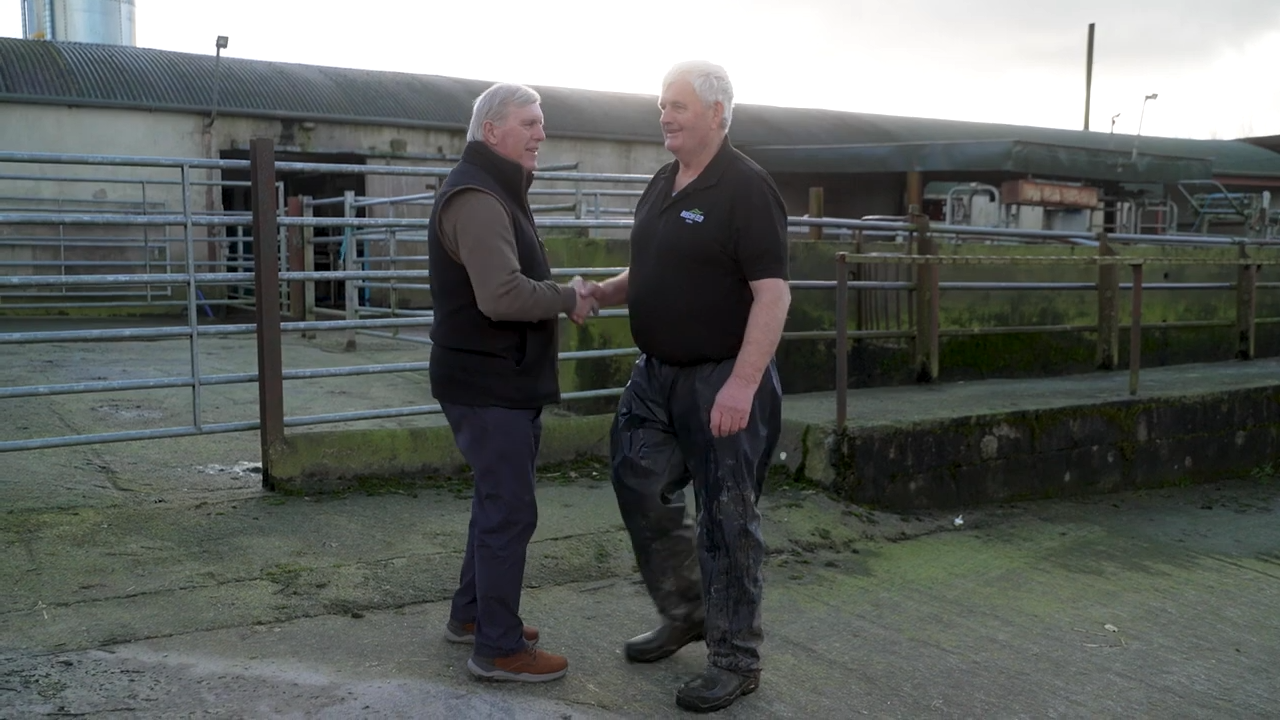
At Beechfield Farm in Mallow, Co. Cork, John Fitzgerald, his daughter Orla and son-in-law Vincent Hennessy have built a system that ensures every calf has a purpose - and a value.
Milking 210 cows in a compact spring-calving system, they start calving in mid-January and aim to finish by early March.
That level of efficiency demands precision - particularly when it comes to breeding.
Their approach is clear. The best animals are bred to sexed semen to secure replacements early. From there, the focus shifts quickly and deliberately to dairy-beef.
As John puts it: “We just try to do what we’re doing a little bit better every year.”
Earlier decisions, better outcomes
One of the biggest shifts on the farm has been moving away from the traditional approach of delaying beef usage.
Today, cows that do not meet replacement criteria are bred to beef from the outset.
That simple change means more calves are bred with value in mind - not as an afterthought.
It also opens the door to something more powerful: using a team of sires, not just one.
The power of a sire team
Munster Bovine’s exclusive dairy beef teams allow bulls to be matched precisely to the cow.
Stronger, mature cows can take continental sires such as Belgian Blue or Charolais.
Other cows are suited to Angus or Hereford, delivering calving ease without sacrificing quality.
That flexibility is critical.
As John explained:
“The beauty of using the beef AI…is that it allows you to use a whole team of bulls across the cows.”
Instead of compromise, farmers get control - and better results across the herd.
Calves that stand out - and sell
On this farm, calf quality is not negotiable.
The aim is simple: produce calves that are easy born, but carry the shape, strength and performance that buyers want.
That strategy is paying off. The farm has built a repeat customer base over several years, with buyers returning for Friesian bulls, Angus and Belgian Blue calves.
In one year alone, 80 calves were purchased with minimal losses - a strong signal of both quality and consistency.
As John notes, calves from the right breeding decisions are “very saleable”.
Cow selection powered by data
Behind the breeding decisions on this farm is a disciplined cow selection process.
Using Munster Bovine’s milk recording data, Vincent identifies which cows justify sexed semen and which should go to beef.
Milk recording, performance, cell count, and fertility all feed into that decision.
“We then pick out our bulls from there,” Vincent explained.
The result is a system where:
- The best cows drive replacement quality;
- The rest of the herd drives calf value.
Performance without compromise
For spring-calving systems, nothing can come at the expense of calving ease or fertility.
That’s why proven sires matter.
As Vincent said:
“It is vital and important that they have records.”
By using proven genetics within Munster Bovine’s dairy beef teams, the farm achieves both:
- Easy calving and short gestation;
- Strong, well-shaped calves with market appeal.
The goal is not just a live calf - but, in Vincent’s words, “a good solid frame calf".
The role of test sires: Building the next generation of proven sires
A key part of the strategy is the use of test sires - something many farmers remain cautious about.
On this farm, they are used selectively and with purpose.
As Vincent explained:
“We try test sires because it's the new genetics that are out there…and if it works for us once, it'll work for us twice.”
Test sires are typically used on stronger, more mature cows where there is less risk, acting as a safeguard while still capturing the potential upside of new genetics.
This approach delivers two advantages:
- Early access to the next generation of high-performing dairy beef sires;
- The ability to influence and accelerate genetic gain.
It also feeds directly back into the Munster Bovine system, helping identify which bulls will go on to become future proven sires.
In that sense, farmers are not just using genetics - they are actively helping shape them.
A smarter way to breed
What this system shows is simple: dairy-beef is no longer secondary. It is a key profit driver.
By combining sexed semen with Munster Bovine’s exclusive dairy beef sire teams, farmers can:
- Maximise the value of every non-replacement calf;
- Reduce variability across the calf crop:
- Meet buyer demand with consistency;
- Improve overall herd profitability.
And critically, they can do it without adding complexity.
For more information on our full range of dairy beef sires, you can contact your local Munster Bovine Breeding Adviser.
Sponsored by